Monday, March 28, 2016

Choosing the Best Camera for your Travels

Travel photography is the joy of making a unique moment last longer than our fragile memory is capable. It is the forethought of enjoying these tangible memories years down the line. Perhaps we just crave an 'I-remember-that!' while reminiscing about our many travels. Whatever the case, we ENJOY the process of capturing images, and we relish in the enjoyment it brings to others (all twelve of them). Personally, when I visit blogs or read books about travel and see amazing photographs of exotic locations (or familiar ones that look completely foreign to me), the underlying thought to my enjoyment is, 'How did they capture this,' or 'What gear did they use to make this moment stand out?'

This got me thinking that there are probably others out there wondering what travelers like us bring on our trips with the intent of capturing the best possible photos. Always keep in mind that it isn't just a relationship between the landscape, the photographer, and the equipment. The post production work (any photo editing software like Photoshop, Lightroom, etc...) plays a huge role in determining the final image. Whether you wondered about any of this or not, here is some insights into our gear and process!

The Cameras

Currently, Checkpoint Chanislawski is rocking the Canon 6D. Complete with a gorgeous, full-frame 35mm sensor and kit 24-105 USM Canon lens, this DSLR package set us back about $2,000 (less than half the price of it's more popular, older sibling, the 5D mk iii).

The Canon 6D with 24-105mm USM lens
This camera/lens combination not only takes stunning, rich photos, but also can take 1080p cinema-quality video. With built in GPS and WiFi connectivity, excellent battery life, and two custom shooting profiles, this camera can do so much for amateurs and professionals alike.

Mike on the 6D, taken with the GoPro Hero 4 Black.
On the video side, we currently use the GoPro Hero 4 Black. For consumer action cameras, this is, admittedly, pricey. For $500 a pop (for the camera/battery/case alone), you seemingly are paying a lot for very little. However, this versatile little camera not only can take a beating, but can capture some very spectacular images in a very travel-friendly, compact size. The similarly-impressive GoPro Hero 3 is a fraction of the cost, but loses points due to its resolution and user-friendliness (or lack thereof). Not only has GoPro vastly increased the WiFi responsiveness (a great help to remotely control or check footage from a tablet/smartphone), but it has somewhat future-proofed itself by being able to shoot at 4K resolution. Again, for an action camera you can operate with two fingers, this is pretty incredible. The still images you can capture aren't much to write home about, but do allow the shooter to create some fun fish-eye photos in well-lit exteriors. When combined with a selfie stick, we are able to do our daily video diary entries with clear audio and video alike.
Including an out-of-the-box water-proof case helps!
Alternatives

You may be thinking, 'Traveling is expensive enough! Why would I throw an extra $3,000 for this?!' Dropping any significant amount of money is going to cause some fear/remorse in any sane, practical mind. I can't spend $10 dollars without spiraling into a temporary depression. I get it. However, the amount you spend is completely dependent on what you want to achieve in your photos. It is true that the more you spend, the better the quality of your photos will be generally. However, there are always alternatives. Can you get great images for under $1,000?

Yes. You can.
Memories... like the corner of my mind...
If Spock says it's possible, then it must be true. But, seriously, yes, you can. Before plunging into a better camera package, Checkpoint Chanislawski and Yours Truly toted the Canon Rebel xsi, an ancient crop sensor DSLR (more on that in a minute), around for over half a decade. With that camera and two relatively cheap zoom lenses, we were able to capture some stunning images. The Rebel series is still being made today and is a great, lower-cost alternative to serious amateur photographers. If it takes such great pictures, why is it a lower price, you ask? Well, that's where the crop sensor comes in. Aside from obvious technical specs (BORING), the sensor is what actually captures your images digitally. The Rebel series gives you a smaller sensor on which to capture information. This gives a slight zoom-in effect to your photos that you don't get on a full sensor camera.
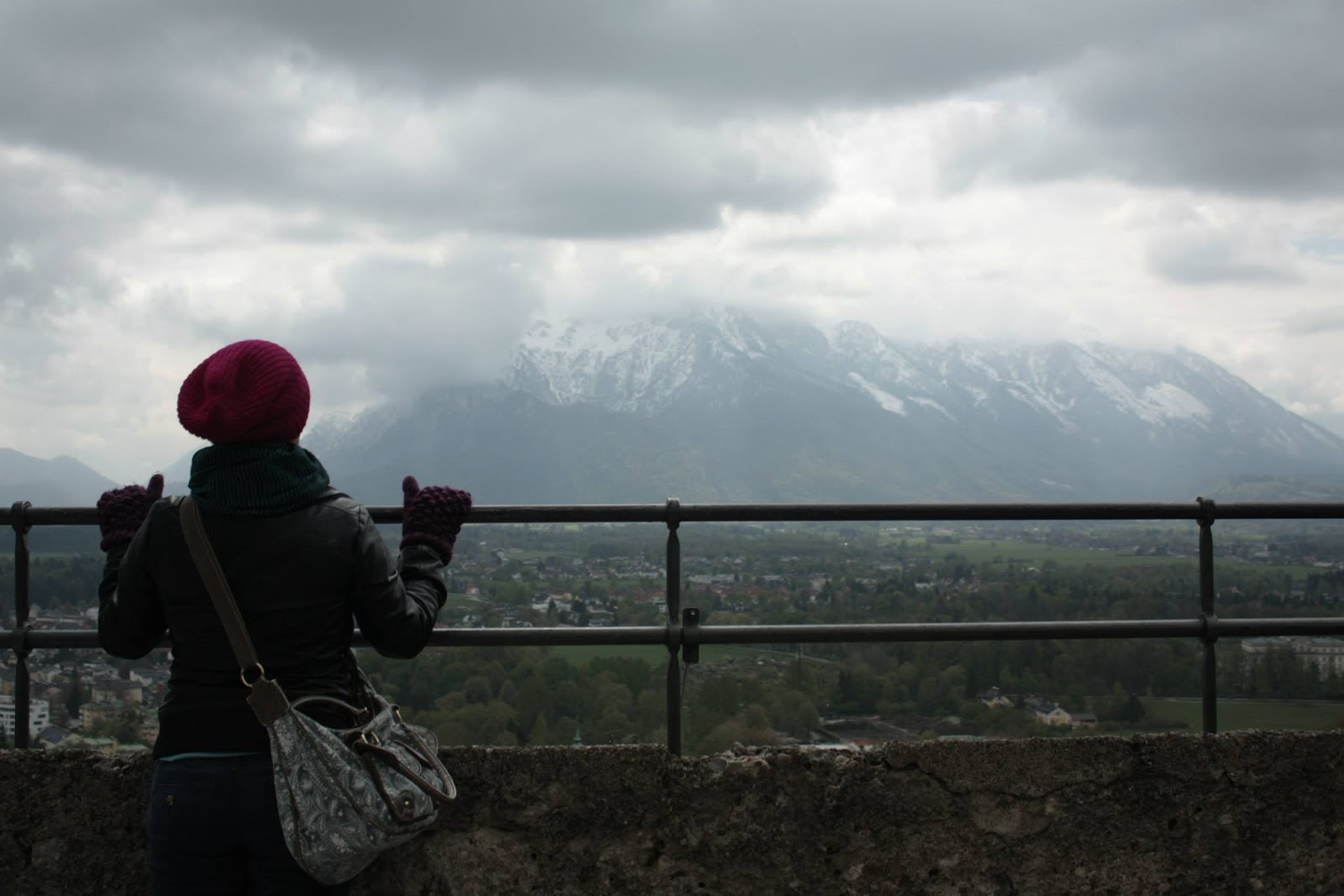
Mountains of Austria in Salzburg.
The images produced by lower-cost crop sensors may not have the initial vibrancy, shallow depth of field, or dynamic range of a full frame camera, but as you can see, with some love and know-how, you can still produce striking images. Again, it's all dependent on your budget and what you want to accomplish. Here is a fairly simple, informative article explaining the major differences between the two types of sensor to help you decide which system is best for you.
Amsterdam at night. Even low light can be captured with some steady hands.


The Canon Rebel T6i.


If SLRs aren't really your speed, there is always the point-and-shoot option. Usually cheaper, and much less technically daunting. These are the 'I just need proof I was there' option. However, with the advent of advanced camera technology in cellphones, the point-and-shoot market has taken a hit and may not be much of a future-proof option much longer. Another intriguing option is the mirrorless (compact system) camera.

Fuji is the current leader of the CSCs.
This option gives you the ability of looking through an electronic viewfinder rather than an optical one. By seeing a digital rendering of the image, you see what the camera will capture before snapping the photo. In contrast, DSLRs give you a 'true view' through an optical viewfinder that tells you what the lens sees before the camera processes the image. Different strokes. Different folks. The prices on these mirrorless systems range from 'Wow, that's cheap!' to 'Wait, why don't I just get an expensive SLR?' However, the best of the best (Fuji X100t) is still only about $1,100. Since I actually have very limited experience with these types of camera systems, check this link out for more information.

Cell Phones

Like it or not, the time when cell phone cameras were a joke have come and gone. Even the lower-end camera phones can now, when in symphony with mobile editing software like Snapseed or Instagram, can produce gallery-quality images just in the palm of your hand (please, for Ansell Adams' sake, though, shoot your landscapes in landscape format). If all you're looking for out of your travel photos is some solid wide-angle landscapes and a fun selfie or two, your phone is all the equipment you need. Don't feel like any less of a photographer because you've only got a cell phone. Know what you want to shoot, compose the shot, tweak it a bit in post, and you'll be just as happy (with less gear to carry around, too!). As long as you don't ruin one of our shots with a terribly timed selfie, we can remain photo-buddies. We, at Checkpoint Chanislawski take plenty of photos with our cell phones and some even make it to our Instagram.

Sunset over Nha Trang, Vietnam. Taken on my Droid Turbo 2.
I'm not going to tell you what the best camera phone is because I genuinely don't know (care) and therefore cannot tell you (lie) that the camera should be the reason you purchase a particular cell phone. However, I can tell you that I purchased a phone that neither had the best camera or was the most expensive option and I still can get pretty fair results. With the Motorola Droid Turbo 2, a little knowledge of framing and composition, and Snapseed, we're able to take some stunning photos when we either can't pull out the Canon or can't be bothered to.

Slightly cumbersome, but well-made.
Other Gear

Aside from the obvious things like lens caps and extra batteries (DO NOT LEAVE HOME WITHOUT THEM), if you want your camera to last and your pictures to pop, you're going to need some support gear to both enhance your photos and keep it protected. Start with the case. The proper case will give you piece of mind that your gear is protected and help alleviate the burden of carrying a cumbersome camera and lens combo. Checkpoint Chanislawski always has at least one camera and one lens on them during their travels (if not more). For us, that means a case with padded compartments.

A must-have accessory!
If you want your images to pop immediately (without any touch ups), I cannot recommend a circular polarizing filter enough. It helps reduce glare on reflective surfaces (and often will remove unwanted reflections) and makes outdoor colors pop with much more brilliance than the lens alone. I say it is recommended for outdoor shots because it does often cut down almost an entire stop of light coming through the lens, which will make the image darker. However, you will notice an immediate jump in the quality of your landscapes once you add a polarizing filter and tune it just right.

Comparing images with and without the circular polarizing filter.
The Verdict

Each photographer (whether they be professional, amateur, or casual) has specific needs when it comes to the equipment they choose to bring with them. A professional may decide to focus on taking rich, vibrant landscapes, and therefore may lean more toward a full-frame sensor camera with wide lenses and a polarizing filter. An amateur may want to chronicle city life of a local population from afar and be compelled to go with a smaller, crop-sensor camera and a telephoto lens. Maybe a casual photographer just wants selfies to prove they've been everywhere they say they've been and only tote a phone and an app. Whatever the aim, make sure you go over a couple of things before you take the plunge into buying gear.

First and foremost, what is your budget? If you aren't looking to break the bank, but yearn for something more intuitive and responsive than your cell phone or old point-and-shoot, try looking into the mirrorless cameras like the Olympus, Sony, or Fuji lines of mirrorless systems. Keep in mind that these options come in a wide range of prices. If you're ready to try your hand at an SLR-type interface for the first time, I recommend saving your big-purchase money for when you have more experience. Instead, going with a crop-sensor option like the Canon Rebel series and a nice lens or two. If you, like us, have loved shooting with an DSLR and want to upgrade to more professional-looking images with a greater clarity and dynamic range, take the plunge and go with a full-frame option. Both Canon and Nikon have great DSLR options in a couple of different price brackets. Keeping in mind that lenses for these bodies will be pricey.

Next, what are you looking to do with your gear? Do you want better images, but not the hassle of going through settings every shot? If you're just looking for a camera to shoot on auto, the lower cost of a crop-sensor DSLR may be your route. The auto settings on the new Canon Rebel line are wonderful for someone who wants the camera to do the heavy lifting. Are you someone that wants light, compact, powerful gear with a low profile? Try the mirrorless route. Tiny and lightweight, but powerful and versatile, the Fuji X100 series can be a great travel companion. Want a great sensor and don't mind a little extra weight around your neck in your travels? Our Canon 6D has proven to be a great buy. With built-in WiFi and GPS connectivity, you can transfer favorite images straight to your phone already geo-tagged and ready to upload to the web.

Whatever the final choice, remember that the images you want people to see first and foremost come from your eye. Your individual perspective when you travel is what is going to make the image memorable more than any technical detail a camera system can provide. In the end, the satisfaction of putting your eye to the eyepiece and capturing a moment from your travels will be worth any price you may end of paying. Happy shooting, everyone.

Monday, March 14, 2016

Travel Affordability


Two freelance film crew members (married to each other)
 attempt to explore Southeast Asia (SEA) in "100 Days" 
on a shoestring budget.

Day 1: Vicky and Mike's last stateside selfie from LAX
We call ourselves "Checkpoint Chanislawski." It's a mash-up of our surnames: Chan and Stanislawski. One year of planning and saving is how we turned a dream into reality. One year that also cost us twelve months of rent in Los Angeles, bills, student loans, more bills, five round trip flights to our hometown of Chicago, nights out with friends, and probably a cumulative four months of unemployment between the both of us. So how do we AFFORD to travel this magnificent Earth? Here’s how WE did it:

SET A DATE
Day 9: Sunlight breaks through some clouds 
over Wat Pho in Bangkok, Thailand
Just like planning for a wedding, we chose a date in the near future that would serve as a deadline for setting aside funding. From our previous backpacking excursion through Europe in 2014, we could reasonably predict that it would take us one year to save up for SEA, especially since the cost of living is considerably cheaper there.

LIMIT CONSUMPTION
As Americans, we’ve been indoctrinated from birth to buy, buy, buy. Starbucks every day. A bigger TV. The newest iPhone. The latest fashion. Instead, we brew our coffee at home. Most of our furniture is bought second or even third hand off of Craigslist. We rarely update our wardrobe, but when we do, we turn to thrift stores. Thankfully, the L.A. scene provides us with a quick turnaround rate on name brand digs for dirt cheap.

BUY ON A TUESDAY, FLY ON A TUESDAY
(or sometimes Wednesday)
From reading travel blogs and being avid travelers, we’ve noticed that airfare tends to be cheaper on Tuesdays. This makes sense because most 9-5ers only have the luxury of taking off Fridays or Mondays to travel rather than mid-week, thus driving up prices on those days. Also, the prime time to buy is 5-8 weeks before the desired departure date. This is what I call “The Golden Period.” It’s the brief window of lower fares offered in between purchases made by the overly-prepared vacationers and the last-minute seat fillers.

Day 10: Silhouette of the majestic Angkor Wat complex in Cambodia


WATCH IT GROW
Our savings account dedicated to our trip, that is. Like a home-grown tomato plant, we nurtured our savings account to fruition. Instead of water and sunlight, though, we used portions of our paycheck. Sometimes we could only transfer $10, other times we were able to throw in hundreds. But the more we invested, the more worldly experiences we could envision. And so we watched our savings grow.


FOREGO LUXURIES WHILE TRAVELING
Day 39: Abseiling next to a roaring waterfall in
  Da Lat, Vietnam
We budget for hostels, street food vendors, and ground transportation. Our goal is to average $30/day/person for our entire trip. A low-key day of walking around, hanging out at public parks, and people watching can help off-set an expensive day of canyoning through forests and waterfalls.

 Accommodations: A hostel bed or budget hotel room can be found for $5-$10 USD/night, even with A/C (for my husband who is covered in fur, it’s necessary in SEA). We occasionally find deals on Agoda.com for accommodations that include a complimentary breakfast.

Food: A hearty meal at a food stall on the street corner can cost $1-$2. Beer can be found for 50 cents in some areas!

Transportation: We tolerated a thirteen hour coach bus ride from Bangkok to Phnom Penh for $9 each, whereas a one-way/one hour flight costs roughly $60/person. As with many things in life, it’s either time or money. Our $49/person open tour “hop-on-hop-off” sleeper bus through Vietnam has proven to be most rewarding. That’s quite a deal for exploring seven cities in one month across the expanse of over one thousand miles.

 
Day 32: A steaming bowl of Vietnamese pho noodle soup
warms the soul!
We booked our Vietnam open tour bus
through TM Camel. We'll hopefully post
 a complete guide to surviving a sleeper
bus before the end of our trip.
LET'S BE HONEST
Through a series of fortunate events and life choices, we can afford to travel because we have fewer financial responsibilities than others and an extremely flexible work schedule. We don’t have dependents or children. We rent, so we don’t pay a mortgage. We are relatively healthy people. But we’ve earned every penny and we live modestly. Some travel articles will boast that anyone can travel the world. Traveling is not for everyone and not everyone can afford to travel. However, by sharing our experience, we hope to encourage the daydreamers to wake up and see that world exploration is possible.

Day 44: Maybe the grass (or rice) is greener on the other side?
Luscious rice paddy fields in Hoi An, Vietnam
And now we leave you with ten more tips that we actually follow...

PRACTICAL POINTERS FOR SAVING MONEY
At home or abroad
  1. Sublet your apartment or rent out your house.
  2. Suspend your cell phone plan while traveling. Free WiFi can be found most anywhere.
  3. Share a meal with your partner/friend when eating out. It's a diet plan too!
  4. Get a reusable water bottle with a filter and stop buying plastic water bottles.
  5. Do your research. Spending extra time comparing costs can save hundreds.
  6. If you like going to the movies, opt for a matinee screening for half the price of a normal ticket.
  7. Check up on current exchange rates before you enter a different country. Knowing the value of things can defend you from scam artists.
  8. Carpool. It's a great excuse to sing-along together to your favorite guilty pleasure pop songs.
  9. If there is something expensive you want to have, whine about wanting it for the next six months. If you still want it, get it. Or don't get it, save the money, and whine for another several months.
  10. Volunteer to do something that's enjoyable to you. It's a free activity that also gives back. Play with kittens at a no-kill shelter for four hours? Don't mind if I do!


Tuesday, March 1, 2016

A Land of Ancient Temples

"It is of such extraordinary construction that it is not possible to describe it with a pen, particularly since it is like no other building in the world."António da Madalena
Cambodia is a land of many wonders. From the richness of the ancient landscape to the unwavering friendliness of the locals, there is no end to the list of reasons to visit this great region of Southeast Asia. Though the Khmer people have had their fair share of hardships, not the least of which is the most recent attempted genocide of the people by the Khmer Rouge dictator Pol Pot, the people have seemed to manage to keep a welcoming spirit to us humble travelers. The options for delicious street food go on for as long as the Mekong river itself, it seems. There is an architecture fused from traditional Cambodian (among other Asian influences) and French colonial that never ceases to intrigue as you walk the sometimes-too-narrow streets. So, as much as our focus of this post could zigzag as much as a Khmer tuk tuk driver, I would like to focus on the main reason I ever wanted to travel here in the first place: Angkor Wat.

Possibly one of the most recognizable structures in the world (it's on their flag!), Angkor Wat is but one of many temples that are scattered like architectural breadcrumbs throughout the northwest Cambodia area of Siem Reap. Whether or not a supreme being exists is beside the point, because when you walk through the chambers and galleries of this magnificent testament to human ingenuity, you can feel the millennium of worship and reverence simply oozing from its cobblestone paths and relief walls.
Vicky stands atop one of the outer courtyard staircases.
Originally a Hindu temple, it has been (like much of Southeast Asia) a Buddhist place of worship since the 12th century. Somehow, Buddhist monks of all ages manage to traverse the tricky walkways and hordes of tourists to do their daily routines. Speaking of those hordes of tourists, we at Checkpoint Chanislawski can't recommend enough to wake up early and catch a tuk tuk from your hotel and get to Angkor Wat for sunrise. This will allow you to be able to see the glorious sight of the sun slowly creeping over the towers to reveal the weathered stone and bathe the grounds in a quiet, magnificent glow. You'll also have the added bonus of rushing into the temple early to have the entire 1.6 million square meter complex to yourself for a while.

Who put this tree here?
A few things to remember. For one, Angkor Wat is only one of over a dozen awe-inspiring temples in the area for you to see. Each one brings its own uniquely impressive qualities. From the hundreds of incredibly detailed stone faces of Bayon, to the seemingly impossibly steep staircases of Ta Keo, to the sprawling strangler fig trees that grow in and out of Ta Prahm, the Angkor complex is a city of unique temples and you will need at least two days to explore them properly. Don't let this task be daunting to you. Enjoy it. Take your time and don't let any size crowd pressure you. Much like the wind, these temples are meant to be enjoyed hand in hand with serenity.

The many faces of Bayon Temple.
You will see the local people both in and around the temple trying to sell you goods from guidebooks, bottles of water, fresh coconuts, and clothing. Remember that this is their livelihood. If not interested, a polite, 'Otey Akun' (no thank you) will be appreciated. However, this will not stop most of them. They will try haggling with you. Just keep walking and repeating yourself. You will see musicians on many of the walkways playing some beautiful and quite appropriate music to enhance the mood. If you are so inclined, linger. Drop them some USD (or a few thousand Riel) for their efforts. However, never give in to beggars. Most will be children, taken out of school and encouraged to beg for a living. The Cambodian authorities will not stop them from doing this, but they urge tourists not to give the beggars money as it is a reason for the youth of Cambodia to not attend school and gain an education.

We'll meet you in the doorways to one of a thousand anti-chambers.
 Regardless, there is no end to architectural delight and human achievement around Angkor Wat. Dozens of temple complexes and thousands of tiny details await you to expand your world. Whether you relish each tiny stone carving or stand at the entrance to each complex in awe at the sheer scale of these gorgeous behemoths, let your inner-Indiana Jones out and go explore the largest playground known to man. Cambodia awaits you.

Another sunset witnessed by the stones with hopefully countless more to come...

Tuesday, February 16, 2016

As We Prepare to Leave Thailand...

Three weeks have passed since we arrived in the lush, sprawling landscape that is Thailand. Each individual experience thus far has, like all our travel experiences, so enriched our lives that it would be nearly impossible to do them all justice in one blog post.

Vicky gazes over the Bangkok landscape.
From playing with urban monkeys in Lopburi to eating countless varieties of cheap, fragrant street food. From enjoying the comfort of a taxi ride to relishing the experience of a modern mass transit system like the Metropolitan Rapid Transit (MRT) or Bangkok Rapid Transit (BTS). From the beaches of Koh Semet to the temples of Ayutthaya, Thailand has so much to offer anyone with at least one working sense. That being said, as we prepare to depart this unique locale, let's talk about our chosen base of operations: Bangkok.

First things first. Thailand is hot. Thailand is extremely hot. Be prepared for heat when traveling here.
Not sure liquification is covered by our Traveler's Insurance.
Plenty of sunscreen and bug repellent. The city is covered in concrete and that seems to make the heat even more intense. As you traverse this urban jungle and make your way through the thick forest of telephone poles and concrete stanchions, be sure to enjoy the hospitality of the locals. The Thai are truly a friendly people. A couple of choice learned phrases like, 'Hello,' (sa-wat-dee) 'How much?' (tao lai) 'Excuse me,' (tona kop) 'Thank you,' (kop kun) go a long way to ingratiating yourself to the local population (of all nationalities). Forgive anyone trying to push merchandise on you because for every one of them, there are two people who are going to cook, prepare and plate a meal for you for a little over $1USD, and do it with an honest smile.

Children playing near Wat Pho.
 Bangkok is not the easiest place to get around, especially if you choose to go without a cell phone data plan (as we do when we travel). However, you have a veritable buffet of transit options when it comes to getting around Bangkok and the surrounding areas. First, for those of you sans data, I would recommend an offline, GPS-based mobile app like MAPS.ME for your location needs. Other than that, old school is always the best school. Physical, detailed maps and planning routes ahead of time. This is not the death of spontaneity, just being sure of your steps until getting acclimated with a given area. Not a day goes by where Vicky whips out a map and looks at me with crazy eyes and says, 'IT'S LIKE WE'RE ON THE AMAZING RACE.' Whether it be by rail, taxi, tuktuk, bus or walking, Bangkok has a sight to see on every corner (usually next to a 7-11). The rail system is not terribly widespread, but very efficient and cheap. Taxi service varies depending on location and time of day. Don't feel bad about sending one away if they deny your request to use the meter. They will try to quote a price that usually is in their best interest in that event. Haggle with them if you don't want to go to the trouble of finding a metered taxi. A good cabbie always deserves a tip, but since it isn't 100% customary to tip, just round up to the easiest 20฿ (Thai Baht).

Watch out for the wobbly sidewalks.
Walking the streets and sidewalks of Bangkok require strong ankles and good peripherals. Don't have your head buried in your phone unless you want to be stunned by a motorcyclist whizzing by, mere inches away. Yes. A motorcyclist. Traffic here is... dense. To alleviate some of the congestion (or just get around it), people will ride on the sidewalks, weaving in and out of pedestrian traffic and harrowingly navigating the makeshift array of cables, poles, and hawking stands. Because of this use, the sidewalks are uneven at best, broken obstacle courses at worst. Be. Aware.

While on the subject of navigating the streets, let's talk about why we're all really here. FOOD. Bangkok has us up to our ears in delicious street foods. Some familiar, some not so much. Rice, noodles, wantons, fried dough, meats on sticks, whole fishes, pork soups, sticky rice, curries...

I seem to have forgotten my point.
Normally, we try to go light on our eating throughout the day and eat out once in a great while. This is to save money and to keep us light on our feet to traverse each city with energy and agility. However, here it is actually more expensive to buy groceries and cook yourself than it is to buy a meal for two at least twice a day. It's horrifying and amazing at the same time. The abundance of choices and aromas is intoxicating and stupefying. Just snack throughout the day and sit down to a takeaway meal in the evening.

7-11 is a resource that should be taken advantage of. When you get money from an ATM, you get it in 1,000฿ increments. Many vendors and taxis simply don't carry enough cash to change that out, so every now and then, go get a 14฿ (about 40¢) Thai milk tea and use those large bills to get ALL THE SMALL CHANGE. 7-11 has cash for days.

7-11. Resource.
Like any major metropolitan area, the traffic is horrid, the air is almost unbreathable, and to find any semblance of serenity, you need to travel at least an hour away from the city's borders. However, there is an experience in every step, an event near every bus stop, and just enough reminders of home to make Bangkok an ideal place to dip your toes in the Southeast Asian waters comfortably. It is an enormous pond teeming with life. From the vibrant colors and angular lines of the architecture above to the stratified layers of food, grime, and drinks spilled from clinked glasses of the streets below, Bangkok is a city unlike any other. Nearly familiar on its surface, yet unique in its heart. We'll see you on the streets, so sawatdee for now.
Until next time...

Monday, February 1, 2016

Crossing the Date Line...

Well, Checkpointers, we're here! Sawadikap, from Thailand! We made it across the Pacific to Japan and onto Bangkok. After an 11 hour flight to Tokyo, meeting up with our friend Ashley from Chicago, and a 6 hour flight to Bangkok, we were understandably wiped and confused.

"...AH-WHAT. NOTHING... Sorry?"
Sufficed to say, we were ready to jump in a taxi and let them do all the work.

However, that was not to be. This is not Europe and English is not the near-guarantee we got used to there. In Europe, we were able to get away with attempting the local languages and our politeness would be recognized and often appreciated. Here, you had better be ready with your dictionaries (we weren't) because not many of the locals speak English. Attempting to flag down a cab that would take us to our address (printed in English, of course) was not easy. Even with our friend's phone navigating us, it was still an adventure.

Once we found our accommodations for the night, our brains had been so forcibly woken up to deal with the transportation issue that I had a little trouble getting to sleep.

The body was willing, however the mind...
Eventually, sleep was achieved and rest was found. Let's discuss our first couple of days in Thailand in one of the only efficient means I know how; photographs.

Bangkok.
What.
We got to Bangkok under cover of night. The streets we walked were quiet and devoid of commerce. First impressions of the city were hard to come by as it would take a while to mine through the stratified layers of character and grime alike. Upon sunrise, the vendors begin to peel back their shutters and the nostalgic aromas of cooking oil and charred meat overpower the smells of a hot, humid urban center. It's at this moment that Bangkok achieves the apex of it's charm.
Taken in that rare, fleeting moment in Khao San when traffic is light.
The city's countless motorbikes weave expertly in and out of traffic or simply skip traffic altogether and hop onto the sidewalk and hope pedestrians are paying attention. Cables carrying electricity, phone lines, or just drying laundry wrap around every surface like a strangler fig. The motto of this burgeoning town seems to be, 'Just keep building.' Every surface is built upon. If a structure is still standing, build on it or add to it. Pop up vendors who have found themselves a spot to call their own improvise with whatever building materials are at their disposal. Need a place to eat our delicious noodles? There is some sheet metal attached to a fence, a telephone pole and the side of a 7-11. Guess what?

...

It's perfect.
Just eating food I'll never tire of at a price I'll never believe we got away with.
"Sà-wàt-dee kráp?" "Tâo rài?" "Kòp kun!" As is the case anywhere, use as much of the local language as possible. The locals appreciate it and it's hell of fun. Having spent only a few days here thus far, I'm sure my appreciation and admiration of Bangkok will only continue to grow. The first impressions were meant as a way to safely jump into the coursing river that is Bangkok. Once acclimated, we'll open ourselves to the historic temples and landmarks that are nestled in this ancient and ever-adapting city. Until then, I can only say we've waded out and the water seems inviting...
Wires, girders, and signage. Oh, my.

Tuesday, January 19, 2016

Still More Glorious Adventures Await...

Hey, Checkpointers! First off...

Seriously, though, with my knees, we won't be jumping this much.
 
Welcome back to Checkpoint Chanislawski! It's been almost two years, but we're finally paddling out for yet another adventure. The original plan was to explore Europe for 100 days, come back to L.A. and work enough to rebuild our travel fund and head out for 100 days in Southeast Asia in early 2016. The Chanislawskis are happy to report that the latter part of that prediction remains 100% factually accurate! However, and this brings me to our 'secondly,' while in Paris in 2014, we received word that our European excursion was to be cut short due to work-related reasons. Instead of coming back stateside in June of that year, we had to come back over a month earlier. That, in turn, made us decide between continuing the trip as we had been (at least a week in each city) and only see another country or two, or moving through Europe at breakneck speed, catching six more countries, but only spending a few days in each place.

DECISIONS.   
Considering that we do not wake up each morn on luxurious bedding made of the monies of our enemies, we were unsure as to when we'd be able to see Europe again. Thus, we chose the sprinting option of taking in each place for mere days at a time in order to make footprints in as many locales as possible. In turn, we had less downtime to dedicate to things like updating the blog (or recovering from pains, sickness, exhaustion, whatever). So, as much as we're sure you've all been salivating these past two years to know how the rest of Europe was (post-Netherlands), you'll have to be satisfied with the same thing I've been telling myself everyday, 'I'll try to get to those blog entries on the cities we missed when my memory is not only pictures.'

...I'm sorry, but it was fantastic and want to do it justice.

In any case, we're here to announce our travels to Southeast Asia! In exactly one week, we'll be getting on a plane across the Pacific, stopping over in Japan for a minute, then landing in Bangkok, Thailand for the first leg of our journey.


After returning from Europe, we spent about a year saving enough money for this trip and bought our tickets to Thailand in November, thus cementing this endeavor in reality. A post soon will itemize as much as possible to help any of you wondering how this trip can be a reality for anyone. For now, this is just our announcement, slipped into the ether, that we are heading out! Thailand, Cambodia, Vietnam, Laos, Myanmar, Malaysia, Singapore, Indonesia, Philippines, and Japan here we come...

Tuesday, April 22, 2014

Bye Bye, European Wifi...

Sitting in my hostel bed before we begin our last morning in mainland Europe. We are currently in Munich, Germany and though the blog may be a couple weeks late updating you all on our adventures, I thought it apropos to have you with us for the actual 'wave goodbye' to this miraculous land. We completed this leg of the adventure by seeing yet another castle in Oberammergau. What a fitting way to suspend the magic for now. We will, of course, continue to tell the stories of our journey, but for now, it is time to shuffle off. Thank you, Europe. Thank you, readers. It is off to London to decompress a bit and then head back to L.A.

Statues WISH they had butts like ours'.